Workday AI Screening Lawsuit Moves Toward a Class-Certification Fight

AI & Work

A federal lawsuit challenging Workday’s AI-powered hiring tools has reached a new stage. On September 14, the plaintiffs in Mobley v. Workday filed a motion asking U.S. District Judge Rita F. Lin in the Northern District of California to certify four subclasses of job applicants: African American applicants, women, people over 40 and applicants with disabilities, according to court records and reporting by Reuters. Class certification would decide how the case proceeds. It would not establish that Workday’s software discriminated against anyone.

What the plaintiffs allege

The named plaintiffs, Mobley and three other applicants, allege that Workday’s screening tools disadvantaged applicants in those groups. They pursue disparate-impact theories, which focus on effects rather than intent, under Title VII, the Americans with Disabilities Act and California’s Fair Employment and Housing Act, and challenge tools including HiredScore Spotlight, Fetch and Candidate Skills Match, according to a September 25 summary by the law firm Duane Morris. In support, the plaintiffs cite Workday testimony that more than 356 million applications passed through Workday Recruiting in 2024.

Workday denies that its technology discriminates and says its AI tools assess job qualifications rather than protected characteristics.

How the case got here

In 2024, Judge Lin ruled that Mobley had plausibly alleged Workday could act as an agent of the employers using its software, allowing claims to proceed, while rejecting claims of intentional discrimination. In May 2025, she granted preliminary certification of a collective action under the Age Discrimination in Employment Act for applicants aged 40 and over. A class-certification hearing on the new motion is scheduled for March 9, 2027. These are procedural rulings and contested claims, not a decision on the merits.

Who explains an automated rejection?

The litigation puts a practical question at the center of recruiting technology: when an outside platform ranks or screens applicants, which organization can explain the result? An employer supplies criteria and makes the final decision; a vendor supplies the model; both generate records a rejected applicant never sees. Understanding what happened requires the job requirements, how the tool was configured, the thresholds used and how the employer acted on its recommendations.

For employers using automated screening, the case is a reminder to keep test results and to document who is responsible for each filter. An audit should separate qualifications that a job genuinely requires from signals that may act as proxies for protected characteristics. That is a general operational lesson, not a judgment that the allegations here are true.

The class definitions and court orders may change before the March hearing; the docket is the authoritative record.

Sources

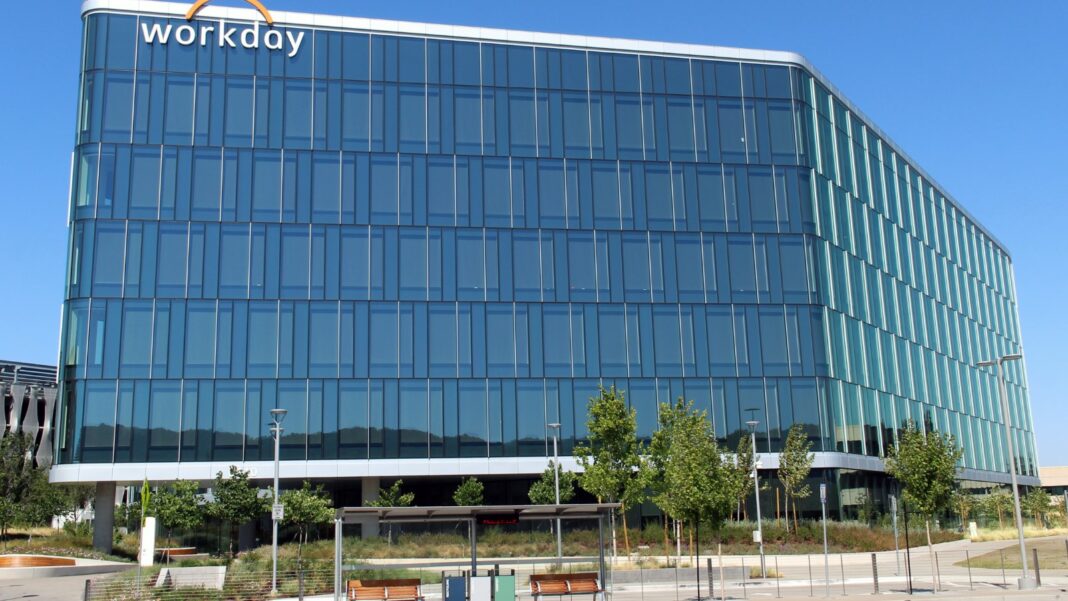
Featured photo: Workday headquarters in Pleasanton, California, photographed in 2019. Photo: Coolcaesar, via Wikimedia Commons (CC BY-SA 4.0). Cropped from the original.


Hot this week

The Upside: Skilled Work Still Has a Place in Georgia’s Next Investment Cycle

The labor market did not suddenly get easy this fall. U.S. employers added a net 29,000 jobs in September, according to the Bureau of Labor Statistics, and the unemployment rate was 4.2%.

September Prices Rose 0.6% While Hourly Pay Rose 0.1%, Cutting Real Earnings 0.5%

Consumer prices rose faster than paychecks in September. Prices climbed 0.6% from August while average hourly pay rose 0.1%, so the purchasing power of an hour of work fell 0.5%, the Bureau of Labor Statistics reported Oct. 14 in its Consumer Price Index and Real Earnings releases for September.

Netflix Cuts About 1,000 Jobs, or 6% of Staff, With Product, Tech, Legal and HR Hit Hardest

Netflix is eliminating about 6% of its workforce, or roughly 1,000 jobs, with most of the cuts falling on its product, technology, legal and human resources teams. Co-CEOs Greg Peters and Ted Sarandos told employees in a memo on Oct.

VDL Plans $77 Million Oakwood Expansion and About 120 Jobs in Hall County

Dutch engineering and equipment maker VDL Groep plans to invest an estimated $77 million over the next several years to expand its plant in Oakwood, in Hall County, and create approximately 120 new jobs. Gov. Brian Kemp announced the project on Oct.

Fed’s October Beige Book: Hiring Mostly Flat Nationwide as Price Pressures Build

Most of the country saw little or no net change in employment from late August to early October, according to the Federal Reserve's Beige Book released Oct. 14. Price pressures, by contrast, intensified.

Topics

The Upside: Skilled Work Still Has a Place in Georgia’s Next Investment Cycle

The labor market did not suddenly get easy this fall. U.S. employers added a net 29,000 jobs in September, according to the Bureau of Labor Statistics, and the unemployment rate was 4.2%.

September Prices Rose 0.6% While Hourly Pay Rose 0.1%, Cutting Real Earnings 0.5%

Consumer prices rose faster than paychecks in September. Prices climbed 0.6% from August while average hourly pay rose 0.1%, so the purchasing power of an hour of work fell 0.5%, the Bureau of Labor Statistics reported Oct. 14 in its Consumer Price Index and Real Earnings releases for September.

Netflix Cuts About 1,000 Jobs, or 6% of Staff, With Product, Tech, Legal and HR Hit Hardest

Netflix is eliminating about 6% of its workforce, or roughly 1,000 jobs, with most of the cuts falling on its product, technology, legal and human resources teams. Co-CEOs Greg Peters and Ted Sarandos told employees in a memo on Oct.

VDL Plans $77 Million Oakwood Expansion and About 120 Jobs in Hall County

Dutch engineering and equipment maker VDL Groep plans to invest an estimated $77 million over the next several years to expand its plant in Oakwood, in Hall County, and create approximately 120 new jobs. Gov. Brian Kemp announced the project on Oct.

Fed’s October Beige Book: Hiring Mostly Flat Nationwide as Price Pressures Build

Most of the country saw little or no net change in employment from late August to early October, according to the Federal Reserve's Beige Book released Oct. 14. Price pressures, by contrast, intensified.

Atlanta Fed Beige Book: Southeast Employment Flat as Skilled-Trade Shortages Persist

Employers across the Southeast are holding headcount steady while still struggling to find specialized, technical and skilled-trade workers, according to the Federal Reserve Bank of Atlanta's section of the October Beige Book, released Oct. 14.

New York-Area Service Activity Falls to Its Weakest Since March as Employment Index Steadies at Zero

Service businesses in the New York area reported a sharp drop in activity in October, but they did not cut staff on balance. The Federal Reserve Bank of New York's Business Leaders Survey, released Oct.

Factory Output Rises 0.3% in September as Utilities Lift Industrial Production

U.S. manufacturing output rose 0.3% in September, the Federal Reserve reported Friday, Oct. 16, recovering from a revised 0.2% decline in August.
spot_img

Related Articles

Popular Categories

spot_imgspot_img