
AI & Work
HD Hyundai says it has delivered the world’s first container ship using a “lashing-free” design that eliminates conventional manual work securing containers on deck.
The 13,000-TEU vessel uses extended cell guides and related equipment to hold containers in place without workers manually fastening conventional lashing rods and turnbuckles.
A specific task is being engineered out
The labor implication is unusually concrete: the technology targets a defined physical task rather than an entire occupation. HD Hyundai says the system removes the need for manual lashing work while also increasing on-deck cargo capacity by more than 10%.
The company describes the design as an enabling technology for broader automation in maritime logistics. It has not published an estimate of jobs eliminated, hours saved or how crews may be reassigned.
Automation without a headcount claim
The development is a useful example of how automation can change work at the task level before there is evidence of occupation-level displacement. The announcement does not provide evidence of a workforce reduction, so the technology should not be treated as proof of job displacement.
What to watch: adoption across additional vessels, changes in deck-crew workflows and whether ports and shipping companies report measurable labor or safety effects.
Sources
- HD Hyundai Samho, press release, October 6, 2026. HD Hyundai Samho
- HD Hyundai, “HD Hyundai Delivers World’s First ‘Lashing-Free’ Container Ship,” October 6, 2026. HD Hyundai release via PR Newswire
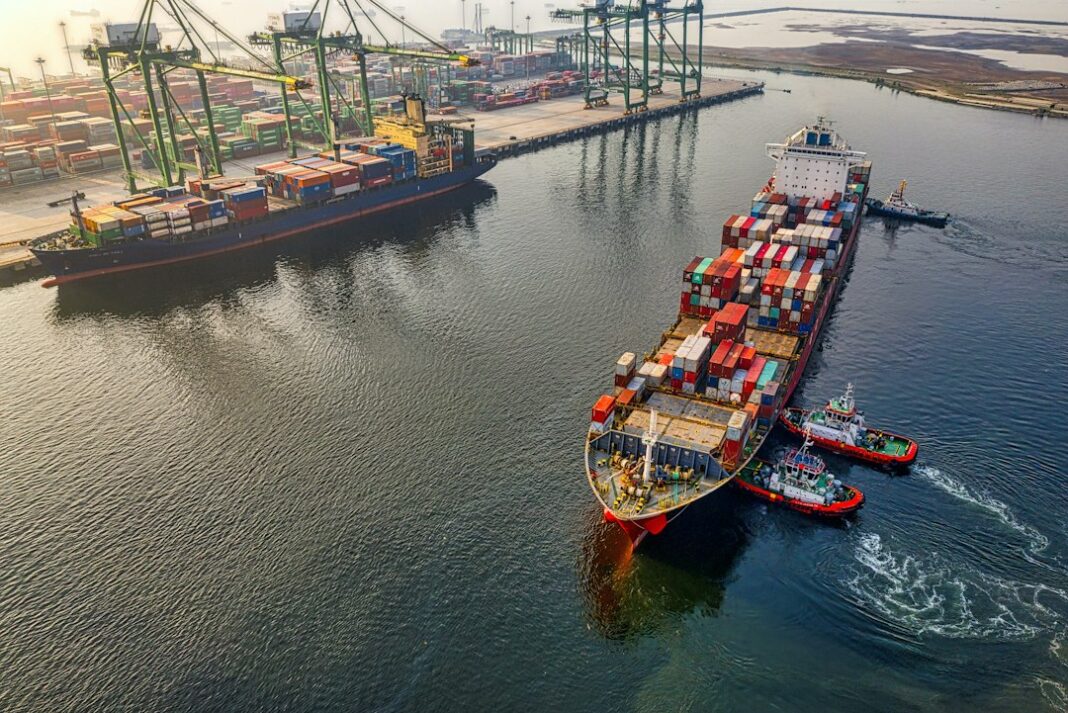
Featured photo: A container ship at sea. Representative image; not the lashing-free vessel described in the story. Photo: william william via Unsplash (Unsplash License).