
Labor Market
Most of the country saw little or no net change in employment from late August to early October, according to the Federal Reserve’s Beige Book released Oct. 14. Price pressures, by contrast, intensified. Three of the 12 Federal Reserve districts called price growth robust, and higher oil prices showed up in every district’s report.
The Beige Book is a qualitative survey. Each regional Fed bank gathers reports from business contacts, economists and other sources in its district, and the reports are combined into a national summary. The Federal Reserve Bank of Philadelphia prepared the October summary from information collected on or before Oct. 5.
Growth uneven, led by factories
Two districts reported moderate growth in economic activity, three reported modest growth, four reported slight growth and three reported no significant change. In the previous edition, published Sept. 2, ten districts reported growth in the slight-to-moderate range and two reported no change.
Manufacturing did most of the work. The Dallas district’s moderate growth was led by what the report called robust, broad-based growth in manufacturing. Six other districts reported modest to moderate manufacturing growth, and the remaining five saw little or none. Other sectors showed little growth overall. Most districts said consumer spending was little changed, and more than half said high-income households were doing much of the spending. Auto contacts in five of the six districts that reported on car sales described flat to modestly lower sales.
The labor picture
On employment, three districts described modest increases, five reported slight increases and four reported no significant change. That is a little firmer than in September, when the tally was three modest, four slight and five unchanged. The report still concluded that “labor market conditions were little changed.”
Labor supply was generally adequate to meet demand. Shortages persisted for specialized, technical and skilled-trade workers. Five districts reported that some firms had reduced staff through attrition, delayed hiring, or expected to create fewer jobs after investing in artificial intelligence to raise productivity.
Wages kept rising. Five districts described moderate wage growth, four modest and two slight. Several districts said inflation was driving cost-of-living pay demands from workers and that benefit costs were rising. Staffing contacts in the Boston district said workers were motivated to look for new jobs because raises had lagged inflation.
Regional results varied. In the Atlanta district, the Sixth District report said employment levels remained flat.
Prices pick up
Three districts characterized overall price growth as robust and eight as moderate. Three of those eight said input price pressures were intensifying. One district reported modest price growth. Four districts said price increases had sped up since the prior report. In September, by comparison, eight districts reported moderate increases and just one reported robust increases.
Firms cited elevated diesel prices and fuel surcharges passing higher costs along the supply chain. Contacts also pointed to commodities, tariffs and insurance. Consumer-facing businesses reported tighter profit margins because price-sensitive customers continued to resist increases. Firms in several districts expect prices to rise further as contracts expire and have to be renegotiated.
What it means for workers
For job seekers, the national message is a market that is holding steady rather than expanding. Most districts are adding few jobs, workers with specialized, technical and trade skills remain hard to find, and some employers are using AI-driven productivity gains as a reason to hire less. Rising prices are also pushing workers to ask for more pay, and in some cases to change jobs.
Caveats
The Beige Book reflects anecdotes and contact reports, not statistical estimates. It cannot measure how many jobs were added or how many openings exist, and the Fed says it is not a commentary on the views of Federal Reserve officials. Its district terms, such as slight, modest, moderate and robust, describe direction and rough size only. The next Beige Book is scheduled for Nov. 25.
Sources
- Board of Governors of the Federal Reserve System, “Beige Book – October 2026: National Summary,” October 14, 2026. https://www.federalreserve.gov/monetarypolicy/beigebook202610-summary.htm
- Board of Governors of the Federal Reserve System, “Beige Book,” accessed October 16, 2026. https://www.federalreserve.gov/monetarypolicy/beige-book-default.htm
- Board of Governors of the Federal Reserve System, “Beige Book – September 2026: National Summary,” September 2, 2026. https://www.federalreserve.gov/monetarypolicy/beigebook202608-summary.htm
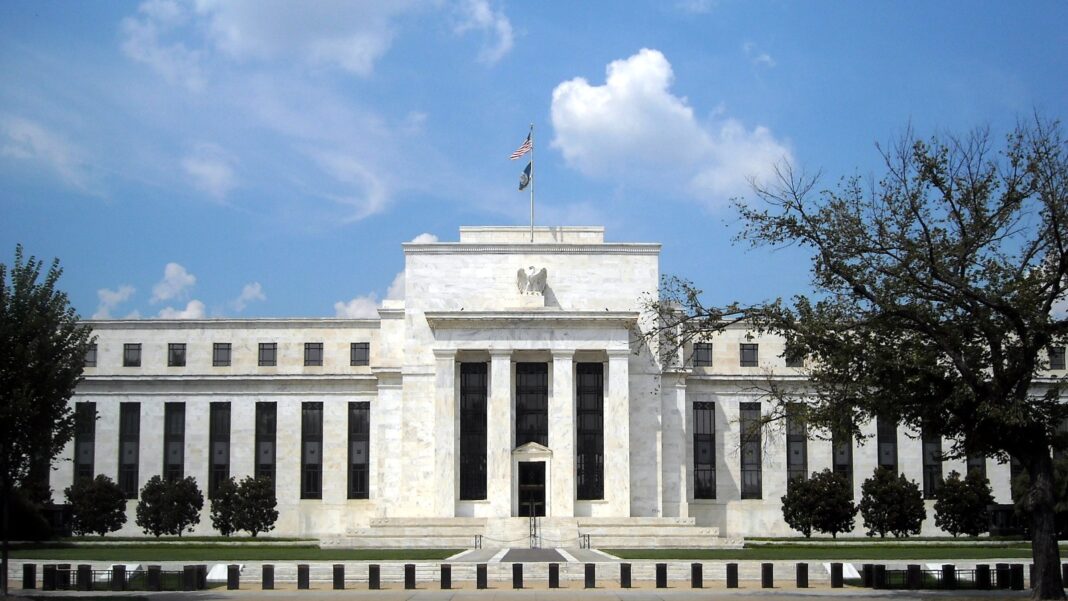
Featured photo: The Marriner S. Eccles Federal Reserve Board Building on Constitution Avenue NW in Washington, D.C., Aug. 13, 2008. Photo: AgnosticPreachersKid, via Wikimedia Commons (CC BY-SA 3.0). Cropped from the original.