


Research & Data
Labor productivity in the U.S. nonfarm business sector rose at a 3.6% seasonally adjusted annual rate in the third quarter of 2026, the Bureau of Labor Statistics reported Thursday, Nov. 5. The gain came almost entirely from higher output: production rose at a 3.7% rate while hours worked edged up at a 0.1% rate.
Measured over a full year, productivity was 2.1% higher than in the third quarter of 2025. The figures are preliminary; the bureau plans to publish revised third-quarter estimates on Tuesday, Dec. 8.
What the numbers measure
Labor productivity is output per hour worked. When output grows much faster than hours, as it did this summer, the ratio climbs. That arithmetic says nothing on its own about why output rose, and it is not a count of jobs. Hours can stay flat because employers hold headcount steady, because workweeks shorten, or because hiring and separations offset each other. The release does not attribute the third-quarter gain to artificial intelligence or any other technology, and productivity data cannot show whether particular workers were replaced.
What the report does show is that businesses produced more in the third quarter with almost no increase in total hours. For workers, the more direct measures are on the pay side.
Pay and labor costs
Hourly compensation in the nonfarm business sector rose at a 2.9% annual rate in the third quarter and was 4.5% higher than a year earlier. After adjusting for consumer prices, real hourly compensation rose at a 1.1% rate in the quarter and 1.0% over the past four quarters.
Because productivity outpaced pay growth, unit labor costs, the compensation cost of producing one unit of output, fell at a 0.7% annual rate in the quarter. Over the past four quarters, unit labor costs were up 2.4%. Falling unit labor costs mean employers’ wage bills grew more slowly than what workers produced during the quarter, which tends to ease cost pressure on businesses and on prices.
Manufacturing was mixed
Manufacturing productivity rose at a 0.3% rate in the third quarter and was 0.4% above its year-earlier level. The two halves of the sector moved in opposite directions. Durable goods manufacturing productivity rose at a 2.2% rate, as output grew 3.8% and hours 1.6%. Nondurable goods productivity fell at a 1.7% rate, with output down 1.6% and hours up 0.1%.
Earlier quarters were revised up
The release incorporates the 2026 annual update of the national income and product accounts that the Bureau of Economic Analysis published on Sept. 30, and the bureau revised most sector measures back to 2021. Second-quarter nonfarm business productivity growth was revised up 0.7 percentage point to 2.1%. Second-quarter unit labor costs were revised up 0.7 point to 1.9%, and real hourly compensation was revised up 1.4 points to a decline of 1.9%. Manufacturing productivity for the second quarter was revised up 0.5 point to 2.9%, and nonfinancial corporate productivity was revised to 3.4% from 2.2%.
Those revisions matter for anyone reading a single quarter as a trend. A figure that looked modest in August now looks stronger, and the third-quarter estimate will itself be revised in December.
Caveats
Quarterly productivity readings are volatile and are reported as annual rates, so a 3.6% reading does not mean output per hour rose 3.6% in three months; it describes the pace if the quarter’s change continued for a year. The year-over-year figure of 2.1% is a steadier guide to the underlying trend. The report covers the nonfarm business sector nationally and does not break out states or metro areas, including Atlanta.
The release does not include payroll employment. The Labor Department’s October employment report is scheduled for release on Friday, Nov. 6, and is not reflected here.
Sources
- U.S. Bureau of Labor Statistics, “Productivity and Costs, Third Quarter 2026, Preliminary” (USDL 26-1631), November 5, 2026. https://www.bls.gov/news.release/prod2.nr0.htm
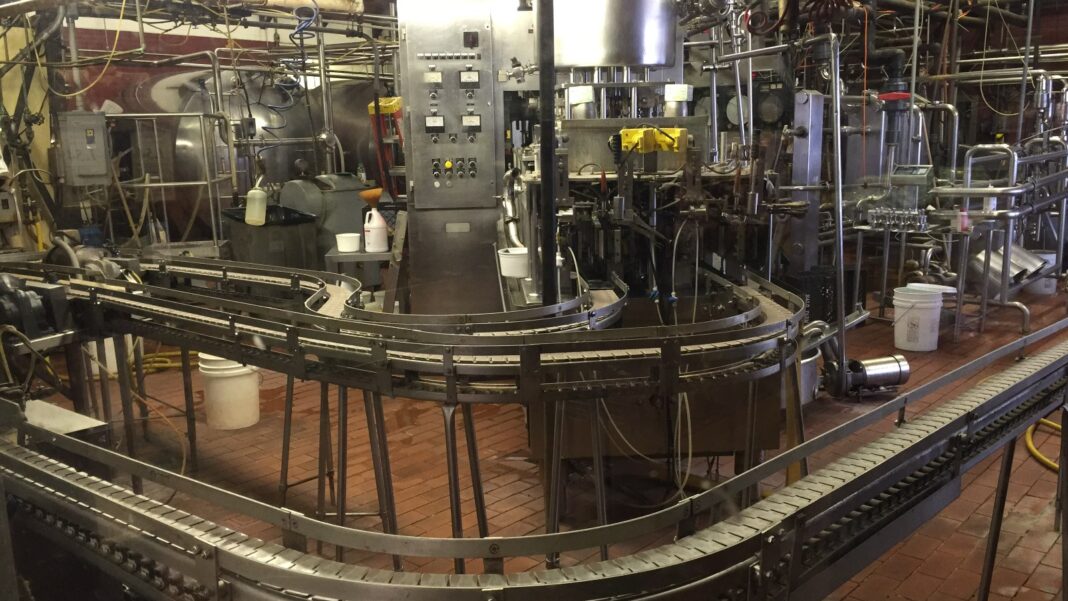
Featured photo: Product packaging machinery at Halo Farms in Lawrence, New Jersey, April 9, 2015. Representative image; not a facility measured in the Bureau of Labor Statistics productivity report. Photo: Famartin, via Wikimedia Commons (CC BY-SA 4.0). Cropped from the original.