
Careers & Skills
Computer science graduates are entering a job market in which a degree alone has become a weaker signal of readiness for work. An Associated Press report published September 24 describes employers and universities placing more weight on artificial-intelligence skills, practical projects and experience that looks closer to real work, as the coding boom that drove enrollment fades.
The numbers behind the shift
According to an AP analysis, the jobless rate for recent computer science and computer engineering graduates is around 7.1%. AP says that partly reflects the large number of students who enrolled during the coding boom. The report notes that recent graduates in fields such as philosophy and art history have had higher employment rates than recent computer science graduates. It also reports that computer science enrollment at four-year schools fell 8.4% by spring 2026, after the number of graduates roughly tripled over a decade to about 362,000 in 2024.
The 7.1% figure is AP’s own analysis for recent graduates nationally. AP does not name the underlying dataset in the published story. It is not a count of unemployed Georgia Tech students, and it does not show that computing careers are disappearing.
An Atlanta example
AP cites Georgia Tech as one school adapting. Professors there researched what AT&T wanted from interns and trained students for a month before they began internships with the company, according to Fisayo Omojokun, associate dean for undergraduate education in the College of Computing. The school plans to expand the approach into a program it will call “Bootcamp to Industry,” he told AP.
What AI skill means in practice
The shift does not mean every student needs to become a machine-learning engineer. In ordinary software, data, product and operations work, AI fluency can mean using a coding assistant, checking generated code, protecting data and recognizing when a model is wrong. Employers can value those habits alongside programming fundamentals.
For students, the portfolio is changing. A project that shows how a candidate framed a problem, used tools, checked the output and shipped working software can say more than a list of languages. For universities, the challenge is to combine lasting fundamentals with enough applied work to make graduates productive in current employer environments. Demand still varies sharply by specialty, experience and location, and the programs themselves are adapting to a fast-moving set of tools.
Sources
- Heather Hollingsworth and Nicky Forster, Associated Press, “As the coding boom fades, computer science grads focus on AI skills in choppy job market,” September 24, 2026, as published by The Baltimore Sun. https://www.baltimoresun.com/2026/09/24/education-ai-job-market/
- The same AP report as published by The Boston Globe, September 24, 2026. https://www.bostonglobe.com/2026/09/24/business/coding-boom-computer-science-grads-ai-job-market/
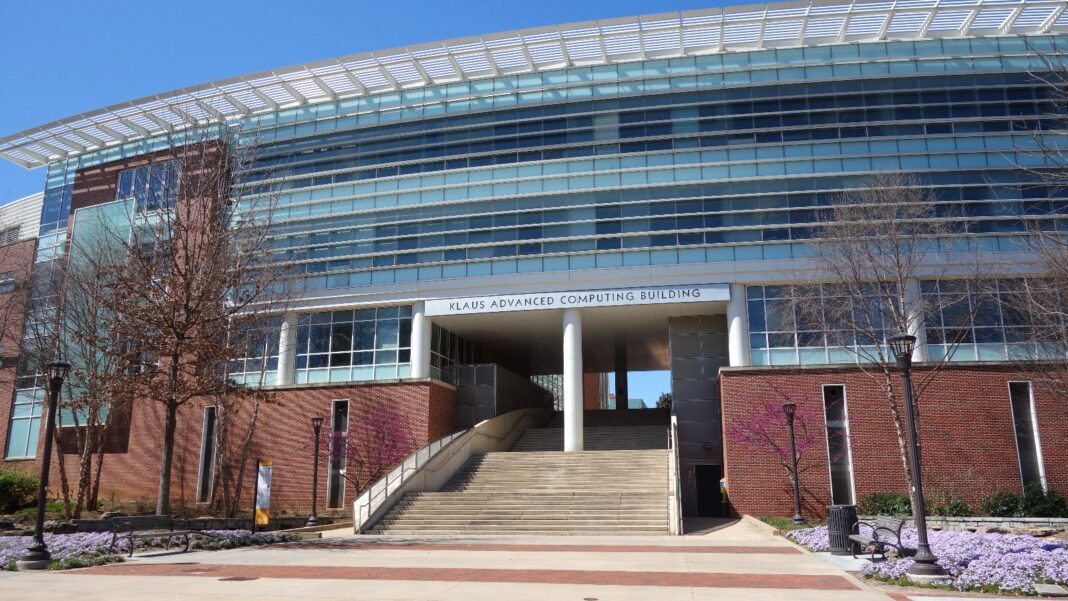
Featured photo: The Klaus Advanced Computing Building, home of Georgia Tech's College of Computing, in Atlanta. Photo: Daderot, via Wikimedia Commons (CC0). Cropped from the original.