The Labor Behind AI Productivity May Be the Knowledge Firms Build Around It

AI & Work

Buying AI tools and building a productive AI-enabled organization are not the same thing. An August NBER working paper by Tania Babina, Alex X. He and Renhao Jiang of the University of Maryland argues that recent productivity gains from artificial intelligence are tied to the organizational knowledge companies build as they hire AI-skilled employees and learn to use the technology—what economists call organization capital.

How the study measures AI investment

The researchers measured firms’ AI investment by their employment of AI-skilled workers, a category they say spans “machine learning through generative and agentic AI.” They combined Lightcast data covering nearly all U.S. online job postings with Revelio Labs résumé data covering about two-thirds of the U.S. workforce, linked the result to U.S. public companies, and built a separate measure of jobs that create organization capital from workers’ job descriptions.

By 2024, they report, U.S. public firms employed more than 300,000 AI-skilled workers, 2.1% of their U.S. workforce. Over 2018 to 2024, a one-standard-deviation increase in the growth of a firm’s AI worker share was associated with 6.2 percentage points greater growth in sales per worker and 7.5 points greater growth in revenue total factor productivity over six years, “roughly one percentage point of additional productivity growth per year.” The authors found no comparable relationship over 2010 to 2018.

What organization capital means

The paper defines organization capital as “durable firm-specific knowledge acquired through learning-by-doing that enables more efficient production.” Its examples include Morgan Stanley training an AI assistant on its own advisors’ meeting notes and Expedia turning engineers’ incident histories into agentic workflows. None of that appears as a line item in a software subscription. The authors find that AI jobs are almost twice as likely as non-AI jobs to build organization capital, 58% versus 31%, and that 66% of generative and agentic AI jobs do so, compared with 57% of machine-learning, natural-language-processing and computer-vision jobs.

Productivity is not headcount

The findings are distinct from claims that AI necessarily eliminates jobs, but they are not reassuring about hiring volume either. Over 2018 to 2024, the authors write, “AI investment predicts substantial sales growth but no employment growth.” AI-investing firms shifted toward workers with advanced degrees and senior roles, while the shares of non-college and junior workers declined. A company can invest in AI skills while changing the composition of its workforce more than its size.

The study uses observed firm data, and an association between AI-skilled employment and productivity is not a guaranteed return on any particular new hire. The authors do add an instrumental-variable test, based on firms’ pre-2010 hiring ties to universities strong in AI research, which they say supports a causal interpretation. NBER working papers have not been peer-reviewed.

What executives can track

For business readers, the operational implication is that staff capability matters alongside software spending. When evaluating an internal pilot, executives can track learning as well as task time. Does a team develop reusable procedures? Can new employees adopt them? Do quality and delivery hold up after the initial enthusiasm fades? Those are tests of whether an investment has become organizational capability. The paper provides a framework for asking them, not a universal implementation recipe or a forecast of employment outcomes.

Sources

  • Tania Babina, Alex X. He and Renhao Jiang, “Canaries in the Gold Mine: Early Productivity Gains from Artificial Intelligence Creating Organization Capital,” NBER Working Paper 35684, August 2026. https://www.nber.org/papers/w35684

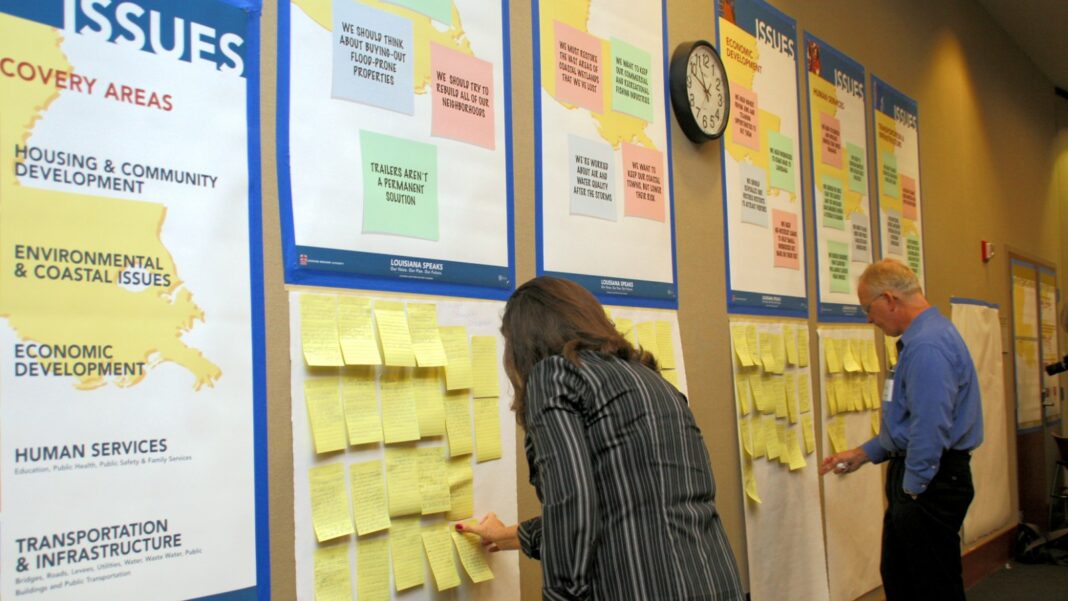
Featured photo: Planners post sticky notes on issue boards during a recovery-planning session. Representative image of teams building shared process knowledge. Photo: Robert Kaufmann/FEMA, via Wikimedia Commons (Public domain). Cropped from the original.


Hot this week

DICK’S and Foot Locker Plan More Than 11,000 Holiday Hires, Down From About 14,000 Last Year

DICK'S Sporting Goods Inc. plans to hire more than 11,000 seasonal workers across its store brands for the 2026 holiday season, the Pittsburgh-based retailer said on Oct. 15. That is a smaller target than a year ago, when the company said it expected to bring on about 14,000.

Georgia’s Labor Force Hits Another Record in September, but Payroll Jobs Slip and Unemployment Edges Up to 3.3%

Georgia's labor force and the number of Georgians with jobs both reached new highs in September, the Georgia Department of Labor said on Oct. 15.

Microsoft’s Brad Smith Calls Vance’s Green Card Fraud Claims ‘Off Base,’ Warns Curbs Could Push Talent Abroad

Microsoft President Brad Smith has publicly rejected the Trump administration's accusations against the company's use of skilled-worker immigration programs, calling Vice President JD Vance's fraud claims "completely off base" and warning that restricting green cards could send top engineering talen

Army Corps Permit Clears Way for Savannah’s $2.3 Billion Third Container Terminal; Construction Set for 2028

The Georgia Ports Authority has its federal permit to build a third container terminal at the Port of Savannah. The authority said on Oct. 14 that the U.S. Army Corps of Engineers approved the permit for the planned Savannah Container Terminal after a three-year review.

Diesel Is Up About $2.50 a Gallon From a Year Ago, and Truck Freight Rates Are Following

The average U.S. retail price of on-highway diesel was $6.179 a gallon in the week of Oct. 12, according to the U.S. Energy Information Administration, about $2.51 more than a year earlier. Federal producer-price data released Oct.

Topics

DICK’S and Foot Locker Plan More Than 11,000 Holiday Hires, Down From About 14,000 Last Year

DICK'S Sporting Goods Inc. plans to hire more than 11,000 seasonal workers across its store brands for the 2026 holiday season, the Pittsburgh-based retailer said on Oct. 15. That is a smaller target than a year ago, when the company said it expected to bring on about 14,000.

Georgia’s Labor Force Hits Another Record in September, but Payroll Jobs Slip and Unemployment Edges Up to 3.3%

Georgia's labor force and the number of Georgians with jobs both reached new highs in September, the Georgia Department of Labor said on Oct. 15.

Microsoft’s Brad Smith Calls Vance’s Green Card Fraud Claims ‘Off Base,’ Warns Curbs Could Push Talent Abroad

Microsoft President Brad Smith has publicly rejected the Trump administration's accusations against the company's use of skilled-worker immigration programs, calling Vice President JD Vance's fraud claims "completely off base" and warning that restricting green cards could send top engineering talen

Army Corps Permit Clears Way for Savannah’s $2.3 Billion Third Container Terminal; Construction Set for 2028

The Georgia Ports Authority has its federal permit to build a third container terminal at the Port of Savannah. The authority said on Oct. 14 that the U.S. Army Corps of Engineers approved the permit for the planned Savannah Container Terminal after a three-year review.

Diesel Is Up About $2.50 a Gallon From a Year Ago, and Truck Freight Rates Are Following

The average U.S. retail price of on-highway diesel was $6.179 a gallon in the week of Oct. 12, according to the U.S. Energy Information Administration, about $2.51 more than a year earlier. Federal producer-price data released Oct.

September Retail Sales Rise 0.8%, but Gasoline Accounts for Much of the Gain

U.S. retail and food services sales rose 0.8% in September, but most of the increase came from gasoline stations. Excluding gas stations, sales rose just 0.2%, according to the Census Bureau's advance estimate released Oct. 15.

Producer Prices Jumped 1.3% in September, the Biggest Monthly Rise Since March 2022

Prices that U.S. producers receive for their goods and services rose 1.3% in September, the Bureau of Labor Statistics reported on Oct. 15.

New York Factory Activity Hits Highest Level Since 2021 While Employment Gauge Holds at 10.3

Manufacturing activity in New York State jumped in October to its strongest reading in nearly five years, but the surge has not yet translated into faster hiring. The New York Fed's Empire State Manufacturing Survey, released Oct.
spot_img

Related Articles

Popular Categories

spot_imgspot_img