


Labor Market
Non-manufacturing employers in the Mid-Atlantic and the Carolinas sharply lowered their hiring expectations in October, according to two business surveys the Federal Reserve Bank of Richmond released Tuesday, Oct. 27, even as current headcounts were still edging up.
In the Richmond Fed’s survey of non-manufacturing firms, the index of expected employment six months from now fell to 11 from 19 in September and 21 in August. The current employment index rose slightly to 3 from 2. In the separate manufacturing survey, the current employment index fell to 3 from 7, while factories’ six-month employment expectations held at 8.
Both surveys cover the Fifth Federal Reserve District: the District of Columbia, Maryland, North Carolina, South Carolina, Virginia and most of West Virginia. Each index is the share of firms reporting an increase minus the share reporting a decrease, so a positive reading means more firms expect to add workers than to cut them. The figures are seasonally adjusted. The non-manufacturing results are based on responses from 228 to 252 firms, and the manufacturing results on 120 to 130 firms.
Service and other non-factory firms
The Richmond Fed said non-manufacturing activity edged up in October. The revenues index rose to 2 from 0 and the demand index to 7 from 2. Local business conditions remained negative but improved to -5 from -8.
The outlook cooled. The future revenues index fell to 20 from 31, and future demand fell to 16 from 29. Pay pressure also eased. The current wages index slipped to 16 from 20, and expected wages fell to 43 from 50. The availability of needed skills index was -2, little changed from -3. That means slightly more firms said needed skills were harder to find than said they were easier.
Prices were mixed. Average growth in prices paid over the past 12 months rose to 6.12% from 5.17%, while growth in prices received was about flat at 3.86%.
Manufacturers
The Richmond Fed said manufacturing activity remained flat. The composite index, a weighted average of shipments, new orders and employment, held at -2. New orders fell to -8 from -6, and shipments rose to 0 from -5. The backlog of orders index dropped to -21 from -10, and capacity utilization stayed at -7.
Somewhat more factories reported raising wages than in September: the wages index rose to 20 from 17, and the six-month wage expectations index was 49. Manufacturers continued to report difficulty finding skills. The availability of skills index was -7, an improvement from -11 but still negative. Spending plans weakened: capital expenditures fell to -12 from -7, and services spending fell to -19 from -10.
Factory input costs remained elevated. Average growth in prices paid over the past 12 months was 7.12%, about the same as September’s 7.08%, while prices received rose to 5.27% from 4.19%. Manufacturers expected both measures to slow over the next 12 months.
What it means for job seekers
The two surveys suggest employers in the region are still adding workers on balance but are less sure they will keep doing so. The drop in service-sector hiring expectations, from 21 in August to 11 in October, is the clearest change. Manufacturing employment remains positive but softer than last month, and factories still report trouble finding the skills they need.
The surveys measure the direction of change reported by a sample of firms, not the number of jobs added or lost. They do not break out results by state, and they are separate from the official payroll counts published by the Bureau of Labor Statistics and state labor agencies.
Sources
- Federal Reserve Bank of Richmond, “Non-Manufacturing Survey,” October 27, 2026. https://www.richmondfed.org/region_communities/regional_data_analysis/business_surveys/non-manufacturing
- Federal Reserve Bank of Richmond, “Fifth District Non-Manufacturing Activity Edged Up in October,” October 27, 2026. https://www.richmondfed.org/-/media/RichmondFedOrg/region_communities/regional_data_analysis/regional_economy/surveys_of_business_conditions/non-manufacturing/2026/pdf/nmf_10_27_26.pdf
- Federal Reserve Bank of Richmond, “Manufacturing Survey,” October 27, 2026. https://www.richmondfed.org/region_communities/regional_data_analysis/business_surveys/manufacturing
- Federal Reserve Bank of Richmond, “Fifth District Manufacturing Activity Remained Flat in October,” October 27, 2026. https://www.richmondfed.org/-/media/RichmondFedOrg/region_communities/regional_data_analysis/regional_economy/surveys_of_business_conditions/manufacturing/2026/pdf/mfg_10_27_26.pdf
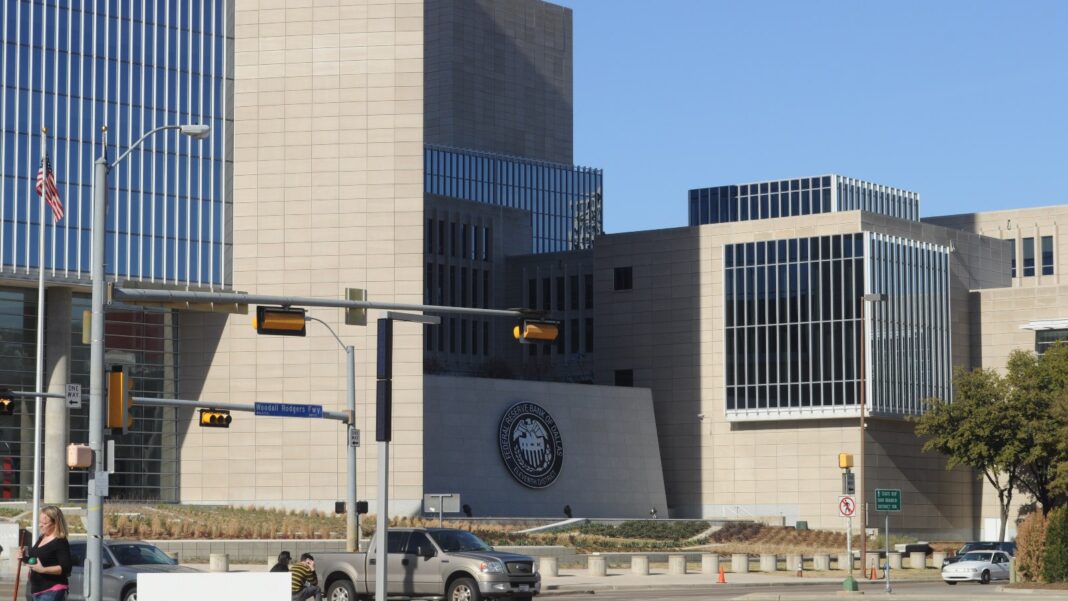
Featured photo: The Federal Reserve Bank Building in Richmond, Virginia, photographed March 30, 2013. Photo: Ben Schumin, via Wikimedia Commons (CC BY-SA 2.0). Cropped from the original.