


By the Numbers
Indeed Hiring Lab’s September 24 snapshot reports a milestone in advertised U.S. labor demand: total job postings on its platform grew 0.7% from a year earlier as of September 18, the first positive annual reading in almost four years, after declines that began in late 2022. The seasonally adjusted Job Postings Index, which sets February 1, 2020, equal to 100, stood at 103.5, its highest level since late March, after rising 1.5% over the month. Yet the index for newly posted advertisements, those seven days old or fewer, was 94.0, about 6% below the pre-pandemic baseline and still edging lower. The gap between the overall stock and its newest additions is the main finding to watch.
Stock versus flow
An advertisement can remain visible while an employer screens applicants, pauses a search or renews a listing. New postings more directly capture recently initiated searches, though even they are not hires. The index itself is built from the number of postings on a given day using a seven-day trailing average, and Indeed notes that data for several dates in 2021 and 2022 are missing and were interpolated. Its figures are specific to its platform and methods and should not be read as a census of every U.S. vacancy.
The improvement is broadening but uneven. Indeed reports that 60% of occupational sectors had postings above their pre-pandemic baseline as of September 18, up from 51% at the start of June. Demand was particularly strong for engineers and in personal care and home health, while technology postings “remain depressed despite improving from last year’s lows.”
What the official data show
The Bureau of Labor Statistics’ Job Openings and Labor Turnover Survey gives a different view. It estimated 7.3 million openings on the last business day of July, an openings rate of 4.4%, and 5.1 million hires during the month, a 3.2% hires rate. June’s openings were revised down by 177,000, to 7.2 million. Indeed itself says the resurgence in postings “has not reached the JOLTS data,” noting that quits (1.9%) and layoffs (1%) remain subdued.
The measures differ in source, definition and timing: an online posting may not equal one unique opening, and a completed hire is a payroll change over a whole month. Directly subtracting one measure from the other would produce a meaningless number.
How to read the milestone
For employers comparing occupational demand, the useful questions are whether more companies are starting searches, whether positions are filled and whether pay offers change. An index sitting above its pre-pandemic baseline, and now growing year over year, signals improvement relative to that baseline, but it cannot establish that any particular candidate will find work quickly.
The next official check is the August JOLTS release, scheduled for September 29. A careful dashboard should show the source, definition, latest observation and update cycle next to each series. Without those labels, a newly positive postings reading can be mistaken for a surge in actual hiring.
Sources
- Indeed Hiring Lab, “US Labor Market Snapshot: September 2026,” September 24, 2026. https://hiringlab.indeed.com/2026/09/24/us-labor-market-snapshot-september-2026/
- U.S. Bureau of Labor Statistics, “Job Openings and Labor Turnover — July 2026,” September 1, 2026. https://www.bls.gov/news.release/jolts.nr0.htm
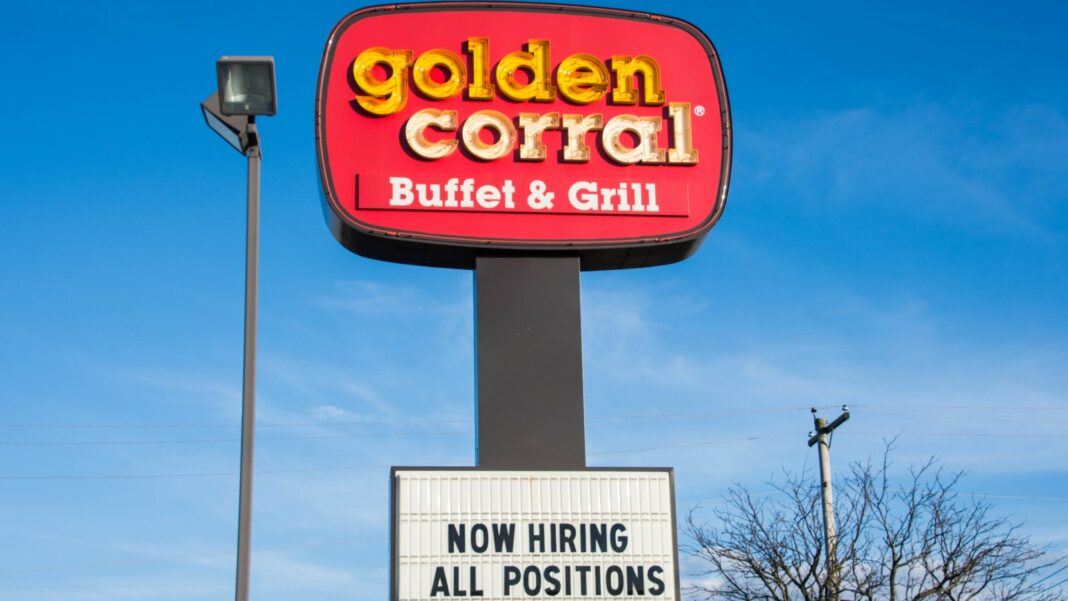
Featured photo: A “Now hiring” sign outside a restaurant. Representative image of job advertising; job-postings indexes measure online listings, not signs or hires. Photo: Mr. Blue MauMau, via Wikimedia Commons (CC BY 2.0). Cropped from the original.




