



By the Numbers
The Bureau of Labor Statistics projects that U.S. employment will rise from 170.3 million in 2025 to 176.2 million in 2035, an increase of about 5.9 million jobs. That is 3.5% growth over the decade, slower than the 10.9% recorded from 2015 to 2025. Released August 27, the projections offer a long-horizon view of industries and occupations at a time when short-term hiring statistics have been uneven.
Where the growth is projected
Health care dominates the outlook. Private health care and social assistance is projected to grow 9.5% and add more than 2.2 million jobs, about 37% of all new jobs expected through 2035. Nurse practitioners are the fastest-growing occupation, at 41.0%, and data scientists are projected to grow 34.6%. At the other end, office and administrative support occupations are projected to decline fastest, by 4.0%, shedding 752,100 jobs, a decline BLS partly ties to AI-powered automation tools.
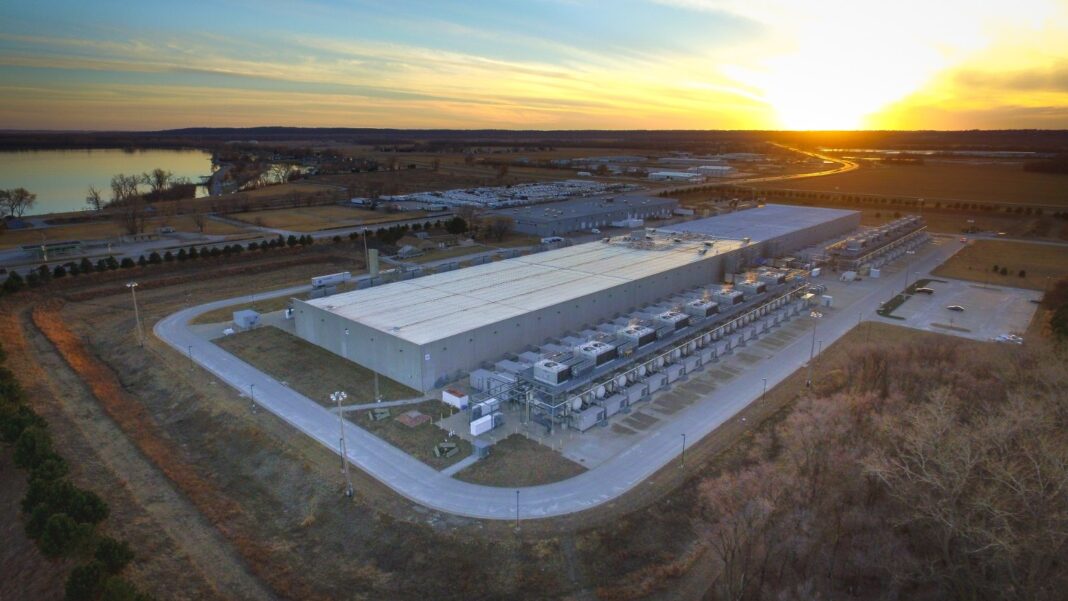
The industry detail shows why percentages and job counts must be read together. Utilities is the fastest-growing sector, at 9.8%, but is projected to add only 58,800 jobs. Solar photovoltaic installers (36.5%) and wind turbine technicians (29.5%) grow quickly but together are expected to add fewer than 15,000 jobs. Computing infrastructure providers, data processing and web hosting are projected to grow 25.1% and add 120,400 jobs.
What a projection is and is not
Employment projections answer a different question from monthly payroll reports. They estimate how the structure of employment may evolve over a decade using assumptions about population, participation, economic growth and industry demand. They do not identify which company will recruit next month, how many local vacancies will appear in Atlanta or whether a particular graduate will land an advertised position. BLS itself notes that the precision of its published figures “does not account for the inherent uncertainty of predicting long-term changes in the labor market.”
A large occupation with slow percentage growth may still generate many openings through retirements and workers moving to other occupations, while a small, fast-growing occupation may create relatively few. Anyone ranking opportunities solely by percentage growth risks confusing the speed of change with the number of jobs available. Role-level analysis should read projected employment change alongside replacement-related openings.
A new AI exposure measure
Alongside the 2025–35 projections, BLS introduced a new data product that classifies occupations “based on their theoretical and observed exposure to artificial intelligence.” BLS says it combined five external data sources into a four-category classification: three theoretical measures of what AI could do and two measures of observed AI usage. It is explicit that “an exposure category is not a forecast of employment growth or decline” and “not an estimate of the probability of AI adoption.” Pairing an exposure category with a ten-year projection without examining the underlying methods could create a false impression of causal certainty.
For employers and training providers, the useful practice is to combine the long-term outlook with regional wage data, current recruiting and observed completion outcomes for local training programs—measures with different reference periods. A transparent report should say which figures are national projections, which are measured local employment and which are current postings. The release is an evidence base for planning, not a schedule of guaranteed jobs.
Sources
- U.S. Bureau of Labor Statistics, “Employment Projections — 2025–2035,” August 27, 2026. https://www.bls.gov/news.release/ecopro.nr0.htm
- U.S. Bureau of Labor Statistics, “AI exposure categories” methodology. https://www.bls.gov/emp/publications/ai-exposure-categories.htm
Featured photo: A psychiatric nurse practitioner meets with a patient at a U.S. Army clinic in Baumholder, Germany. Nurse practitioners are the fastest-growing occupation in the BLS projections. Photo: Marcy Sanchez/U.S. Army, via Wikimedia Commons (Public domain). Cropped from the original.



.jpg)