


Labor Market
A new federal law directs the Commerce Department to work out which high-demand products used across the nation’s critical infrastructure are being imported because U.S. factories lack the capacity to make them, and whether they could feasibly be manufactured domestically. President Donald Trump signed the Critical Infrastructure Manufacturing Feasibility Act on Tuesday, Oct. 20, and it became Public Law 119-127, according to the congressional record of the bill’s actions.
The law is a study mandate. It does not fund factories, award grants, set hiring targets or create any jobs on its own. What it produces is a report, due to Congress within 18 months, that could inform later policy decisions about where domestic manufacturing might expand.
Rep. Mariannette Miller-Meeks, R-Iowa, who sponsored the bill as H.R. 1721, announced the signing on Wednesday, Oct. 21. In a statement, she said the legislation “creates a roadmap to bring manufacturing back and create new good paying jobs for Iowans.” Whether any jobs follow depends on decisions the law itself does not make.
What the law requires
Under the enacted text, the Secretary of Commerce has one year from enactment to complete a study that does four things. It must identify, within each critical infrastructure sector, any product that is in high demand and is being imported because of a manufacturing, material or supply-chain constraint in the United States. It must analyze the costs and benefits of making those products domestically, including effects on jobs, employment rates and labor conditions in the U.S., as well as on the cost of the product. It must identify which of those products feasibly may be manufactured in the United States. And it must analyze the feasibility of, and any impediments to, producing them in a rural area, an industrial park, or an industrial park in a rural area.
Within 18 months of enactment, the secretary must send Congress a report with the study’s results and recommendations, and post it publicly on the Commerce Department’s website. With enactment on Oct. 20, 2026, those deadlines fall around October 2027 for the study and April 2028 for the report.
The law defines critical infrastructure sectors as the 16 sectors designated in Presidential Policy Directive 21, issued Feb. 12, 2013. It also states that the section does not give the Commerce secretary authority to compel anyone to provide information, which means the study will rely on data the department already has or that companies supply voluntarily. The enacted text contains no appropriation.
A long road to enactment
The measure first appeared in the previous Congress as H.R. 5390, which was the subject of a House Energy and Commerce subcommittee hearing on Sept. 20, 2023. Miller-Meeks reintroduced it as H.R. 1721 on Feb. 27, 2025, with Reps. Kim Schrier, D-Wash., and Erin Houchin, R-Ind., as cosponsors. The Energy and Commerce Committee approved it by voice vote on March 4, 2025, and the House passed it by voice vote under suspension of the rules on April 28, 2025.
The bill then sat in the Senate Commerce, Science and Transportation Committee for nearly 17 months. The committee was discharged on Sept. 23, 2026, and the Senate passed the bill the same day by unanimous consent without amendment. It was presented to the president on Oct. 14.
What it means for manufacturing workers
The law arrives as factory employment nationally has changed little over the past year. U.S. manufacturing employment was 12,652,000 in September 2026, seasonally adjusted and preliminary, compared with 12,612,000 in September 2025, according to the Bureau of Labor Statistics.
For workers and employers, the practical effect in the near term is nil: no plant siting, contracts or training money flows from the statute. The study’s required analysis of jobs, employment rates and labor conditions could, however, give lawmakers a federal accounting of where domestic production of critical goods is constrained and what reshoring might mean for employment, particularly in rural areas and industrial parks.
Several caveats apply. The deadlines are statutory, but the law provides no dedicated funding, and the department cannot compel companies to share production or sourcing data. Any recommendations in the eventual report would require separate action by Congress, federal agencies or private companies before they affected hiring.
Sources
- Congress.gov, “H.R. 1721 (Enrolled Bill), Critical Infrastructure Manufacturing Feasibility Act,” 119th Congress, 2026. https://www.congress.gov/119/bills/hr1721/BILLS-119hr1721enr.htm
- Congress.gov, “H.R.1721 – Critical Infrastructure Manufacturing Feasibility Act: All Actions,” accessed October 22, 2026. https://www.congress.gov/bill/119th-congress/house-bill/1721/all-actions
- Office of Rep. Mariannette Miller-Meeks, press release on the Critical Infrastructure Manufacturing Feasibility Act becoming law, October 21, 2026. https://millermeeks.house.gov/media/press-releases/miller-meeks-bill-bring-manufacturing-jobs-back-iowa-becomes-law
- U.S. House of Representatives, House Report 119-76 on H.R. 1721, Committee on Energy and Commerce, April 24, 2025. https://www.congress.gov/119/crpt/hrpt76/generated/CRPT-119hrpt76.htm
- U.S. Bureau of Labor Statistics, Current Employment Statistics, manufacturing employment, seasonally adjusted (CES3000000001), accessed October 22, 2026. https://data.bls.gov/timeseries/CES3000000001
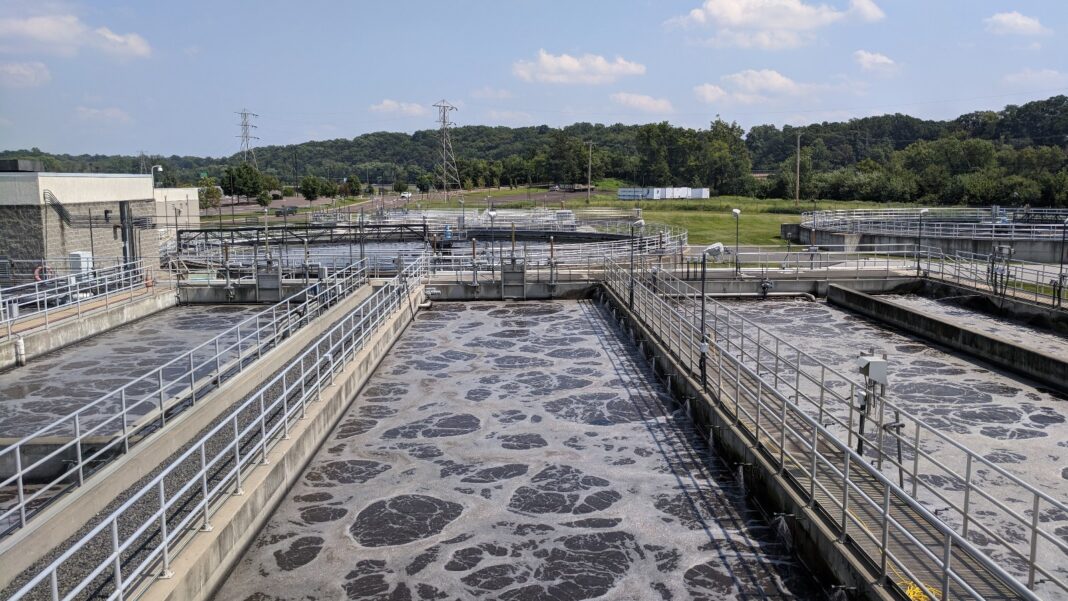
Featured photo: Manufacturing facilities in the Morristown Airport Industrial District in Morristown, Tennessee, photographed Aug. 7, 2020. Representative image; the law does not name or fund any specific site. Photo: AppalachianCentrist, via Wikimedia Commons (CC BY-SA 4.0). Cropped from the original.