


Employers
NatWest Group will require its hybrid and remote-first staff in the U.K. to work from the office at least two days a week starting in February 2027, a change that drew sharp criticism from the Unite union on Tuesday, Oct. 20. The British bank said it was giving employees time to plan; Unite said the move breaks commitments made in last year’s pay deal and called on NatWest to drop it.
The change applies to two groups of employees, according to City A.M. About 17,300 staff on NatWest’s hybrid pattern, who are currently required in the office at least three days a fortnight, and about 13,500 remote-first staff, who currently attend two days a month, will move to a minimum of two days a week. Business Matters put the total affected at more than 30,000. Employees in customer-facing, branch and trading roles are not affected because they already must be on site at least four days a week. Business Matters reported that NatWest employs about 40,000 people in the U.K.
The end of a 2021 arrangement
The new rule unwinds the flexible structure NatWest adopted in 2021. Reuters reported that the bank then set out a three-part model under which 55% of staff would work on a hybrid basis, 32% would be “remote-first” with a minimum of two days a month in the office, and the rest would be office-first.
NatWest framed the policy as a move toward consistency. “Flexible working remains an important part of how we work,” a spokesperson said, adding that the bank was “introducing a more consistent approach across the bank.” “We recognise this will be a change for some colleagues and we’re giving them time to plan ahead,” the bank said.
Unite's objections
Unite, which represents NatWest staff, objected on cost, family and process grounds. General Secretary Sharon Graham called the decision “yet another kick in the teeth for workers who have suffered years of real-terms pay cuts” and said NatWest “must ditch these proposals and engage properly with its workers.” She added: “Thousands of workers face higher travel and childcare costs, and disruption to caring responsibilities.” Unite National Officer Caren Evans said, “For many workers, homeworking is not a perk.”
The union also argues that the policy violates NatWest’s 2025 pay deal, which, according to Reuters, included a jointly negotiated process for consulting workers and the union on future changes to office attendance. That is Unite’s position, not an established finding; NatWest’s quoted statements do not address it, and no ruling on the claim has been reported.
A wider shift in U.K. finance
NatWest is the latest large employer to pull back on remote work. Business Matters reported that Barclays has pushed back a plan to raise office attendance from two to three days to the start of 2027, after originally targeting this month, and that JPMorgan Chase has required its roughly 23,000 U.K. staff to be in the office five days a week since March 2025. Reuters noted that Airbus, Stellantis, Amazon and Microsoft have also scaled back remote-work arrangements.
For NatWest employees, the practical changes are concrete: the remote-first group faces the largest jump in commuting days, and the hybrid group moves from three days every two weeks to at least four. The new pattern is not due to begin until February, leaving several months for the union and the bank to talk before it takes effect.
Sources
- City A.M., “Union fury at Natwest plans for staff to attend the office TWO DAYS a week,” October 20, 2026. https://www.cityam.com/natwest-facing-backlash-from-union-after-ordering-staff-into-office-twice-a-week/
- Reuters via 102.7 WBOW, “NatWest faces union backlash after asking staff to spend at least two days a week in office,” October 20, 2026. https://1027wbow.com/2026/10/20/natwest-faces-union-backlash-after-asking-staff-to-spend-at-least-two-days-a-week-in-office/
- Business Matters, “NatWest tells 30,000 staff to work in the office two days a week,” October 21, 2026. https://bmmagazine.co.uk/news/natwest-office-attendance-unite-row/
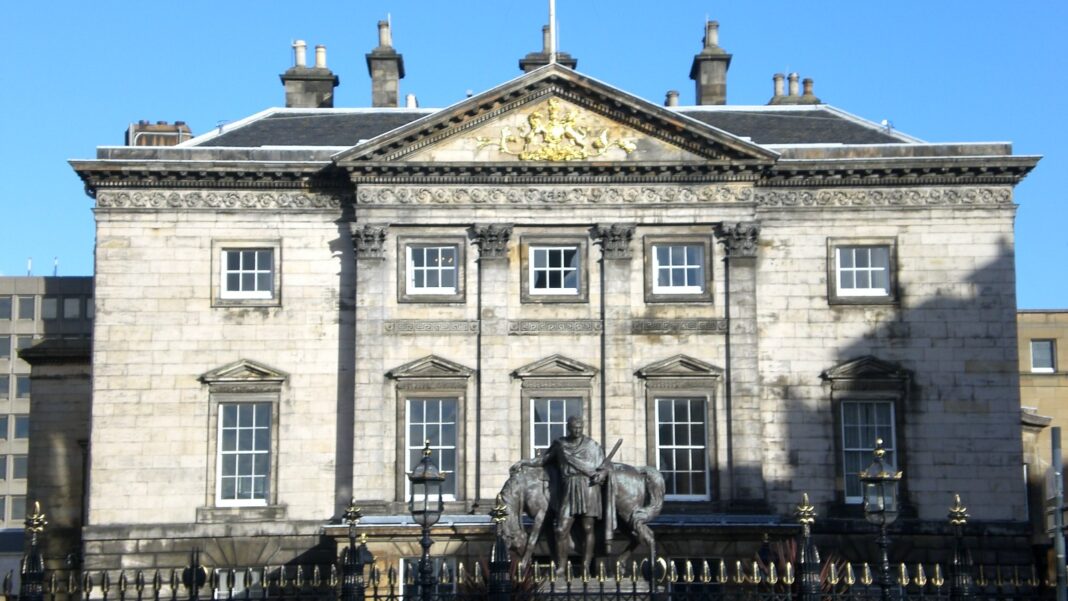
Featured photo: NatWest Group's registered office at 36 St Andrew Square, Edinburgh, in a photo first uploaded in 2007. Photo: Thunderwing at English Wikipedia, via Wikimedia Commons (CC BY-SA 3.0). Cropped from the original.